Friday, July 16, 2010

U.S. gives Rwanda $50 million to reduce hunger

July 16, 2010


Kilgali, Rwanda is the capital of Rwanda and the weather last week was a hot 75 degrees and a slight haze hung in the air during the daytime hours. I met with the Food Science staff and visit the University laboratories of Kilgali Institute of Science and Technology where a new meat processing plant with state of the art equipment had just been installed.
The center plans to be the training site for food companies involved in food processing and marketing. I met with Dr. Hilda Vasanthakaalam to discuss training needs for KIST staff and students to incorporate soy in meat processing. We brainstormed about sources for soy isolates. We talked with Vestine, the Rector, about an acceptability study for meat containing soy during the pilot testing of the processing plant. Dr. Hilda recently attended the NSRL Short Course, INTSOY in early June, so she enthusiastically visualized how this training center can be the Soybean Processing and Utilization for all of Rwanda.
At SINA Enterprise in Nyirangarma, Rwanda, I provided a soy seminar in the local language to employees of SINA and local area farmers. We discussed using soy in juice and they were quite interested in soymilk and yogurt applications.
Meetings were also held with the National University of Rwanda who is organizing a conference on food security and nutrition. Rwanda has made remarkable economic progress over the past fifteen years with per capita incomes rising; however, food insecurity remains a significant threat. High population density and growth have led to deforestation, soil erosion and decreased agricultural productivity. 2.2 million people are food-insecure and another 24% are highly vulernable to food insecurity. 83% of the country lives on less than $2 per day. Over 50% of children are chronically malnourished.
I met with the Minister of Education and Executive Director of Higher Education to discuss school nutrition policy and school feedin programs. Every school day, 300,000 elementary school students receive a hot lunch in a program managed by the United Nations World Food Program. A transition of responsiblity for school meals is gradually transitioning from WFP to the Rwandan government with full phase out by 2012.
This trip comes on the heels of the announcement by the U.S. government that they have earmarked $50 million to boost food output. Rwanda is also part of the Feed the Future Initiative who will receive grants from the World Bank lead Global Agriculture and Food Security Program.
The Rwandan diet consists primarily of sweet potatoes, cassava and peas with bananas, corn and fruits added in season. Protein deficieny is a serious problem and soy is a complete, high-quality protein that can help solve this issue. I had the chance to eat some of my favorite dishes on this trip - - a white fish similar to tilapia with a delicious sauce, amandazi (fritters) and maniok (beans with cassava) with mangos and papaya for dessert. I did miss my Jimmy John's while I was gone and had that when I returned to Champaign!
Pascasie Adedze


Soy Flour makes its way into noodle production in Cambodia

July 14, 2010

Courtney and I continue on our travels and this leg of the trip brings us to Phnom Penh, Cambodia where we met with our partners at International Relief and Development (IRD). We prepare for the upcoming seminar to be held at the Men Sarun Noodle Company. We will be providing technical assistance to local tofu manufacturers with a focus on food safety. We are also working together with IRD and the noodle manufacturing companies to incorporate soy flour into noodle production. The soy flour not only increases the protein content of the noodle, but it also gives the dough an elasticity that aids in processing and production.

July 15, 2010

We co-hosted a Soy Nutrition in Human Health Workshop in Phnom Penh, Cambodia for local industry and government representatives. We gave presentations about the benefits of soy for human nutrition throughout life as well as presentations focused on soy applications in local food products. It was a great opportunity to share the value of soy with a new audience in Cambodia.
The seminar took place at the Men Sarun's riverside facility. What an outstanding processing plant and this Cambodian location is in a beautiful part of the country. The scenery was breathtaking. Men Sarun Noodle Company is growing rapidly and we were able to visit the construction site of their new expansion. We also visited the noodle processing plant and were very impressed with the efficiency and outstanding manufacturing processes. After the seminar, we met with our collaborators and discussed the projects and next steps.

July 16, 2010

We had the opportunity to visit the offices of International Relief and Development to discuss programs in the region. There seems to be many ways we can support each other in our efforts to improve the nutrition of the people of Cambodia.

The trip has turned out to be extremely worthwhile. The seminars, workshops and meetings all show promise for using soy in local recipes, baking applications and noodle production now and in the future. Soy has gained a fooothold in Vietnam and Cambodia and we hope to see continued growth and carry on our projects with local partners and collaborators.

All the best,

Bridget

Tuesday, July 13, 2010

Drinking Dragon Fruit Juice in DaNang

It was another early start to our Vietnam trip today. Courtney and I took a quick flight to DaNang, located in the southern part of the country. The city of 700,000 people, sits on the southerly curve of a vast, well-protected bay. It has developed into central Vietnam's dominant port and its third largest city.

We brought rain with us from Hanoi, which resulted in our checked luggage being soaked! Que, Sera, Sera. We boarded a boat, wet luggage in tow and traveled to Cham Island, off the coast of Vietnam. Cham Island is a very unique palce due largely to the spectacular coral reef that rings a portion of the Island. It is also home to a new soy microenterprise and expansion on a previous soy project.

Last year, NSRL partnered with the U.S. Vietnam Foundation to provide technical assistance to FaifoSoy to create a soy-based microenterprise in the DaNang area. FaifSoy sent a team to NSRL to receive hands-on training in the production of soymilk, tofu, yogurt, ice cream and all types of soy used in baking applications. After returning to DaNang, the FaifoSoy was visited by NSRL technical experts that assisted the FaifoSoy team with further training at their new production site. That microenterprise continues to produce the soy products for the local market in DaNang City as well as for donation to local schools. FaifoSoy has also expanded their efforts to a new brand located on Cham Island. This is a location that the family behind FaifoSoy has long been involved and well invested. They have worked to help create a conservation center on the Island and assist with local efforts to help protect the coral reef.

The Island is lovely and attracts many tourists which present vibrant and lucrative marketplace for the expansion of the FaifoSoy soy baked products. In addition to this, the new FaifoSoy branch is also providing products to the Islands' schools as part of their social responsiblity program. We had timed our visit well and were able to participate in the distribution of the soymilk to the local children. They drank the milk over ice and through straws. They all gave us a "thumbs up" on the taste. The children receive soymilk produced by FaifoSoy twice a week.

We returned from Cham Island and traveled to the original FaifoSoy production facility to meet with the manager and his team. It was great to see him again and to see the exciting progress that continues at FaifoSoy. They have added multiple new soy dairy and soy-enhanced baked goods. We tasted their new soy yogurt, a refreshing treat on such a hot afternoon! We also had a chance to see that the FaifoSoy microenterprise is prospering due to the dedication of the FaifoSoy team.

We returned to our hotel for a cold serving of dragon fruit juice. This stunningly beautiful fruit, also known as pitaya, is an intense color and shape with delicious taste and magnificent flowers.
The hotel had an amazing presentation in serving the delicacy. The fruit, which is a beautiful hot pink color with curly green edges, about the size of a softball, was resting in a small wooden chair. Sweet! A very refreshing way to end the day and it made us forget just for a moment about our soaked luggage!

Regards,

Bridget

Monday, July 12, 2010

Soy Seminar at Thang Long University in Hanoi

Monday, July 12, 2010

Today began with an early morning in Hanoi, the country's captivating capital. Many here rise early to exercise by Hoan Kiem Lake. We though are headed to Thang Long University for a seminar on Soy Protein Nutrition and Applications and Food Safety. Thang Long is the first private university in Vietnam, founded in 1988.

Our drive was enjoyable as we watched Hanoi wake up. It is an ever expanding city with what seems like construction zones on every corner. It is also a city of motorbikes. They are the mode of transportation for everyone. Many families were headed to school or work. It is so amazing to see entrepreneurs buzzing by on their motorbikes weighed down by backpacks and satchels loaded with a wide array of wares - - everything from caged ducks to massive bundles of sweet smelling flowers.

We co-hosted today's seminar with the Thang Long University and the U.S. Vietnam Foundation. The seminar included presentations from NSRL, the Director of the Vietnam National Institute of Nutrition, the Head of the Department of Food Safety Administration, faculty from the Thang Long University and representatives from the U.S. Vietnam Foundation. It was well attended with great interaction from local industry, hospital staff and government officials. We were excited to see the interest in soy protein and the enthusiasm for applying nsoy into local programs and products. It was a wonderful opportunity to share with key decision makers about the nutritional and economic benefits of soy protein for commercial products as well as share information about using soy for feeding and health programs.

We also had a moment of fun when we were asked for ideas on how to include soy protein into local Vietnamese foods and recipes. We took the opportunity to share with the audience ways we could have made today's lunch served at the University cafeteria, a soy lunch. We hope we made Marilyn, our Master NSRL Soy Chef proud!

After the seminar was completed, we returned to our hotel and walked to the Hanoi Opera House. The Hanoi Opera House is considered to be a typical French colonial architectural monument and is also a small-scale replica of the Palais Garnier in Paris. It was erected by French colonists between 1901 and 1911. It was spectacular to see the impressive design upclose.

We then enjoyed some local cuisine and called it a night.

Regards,

Bridget

Saturday, July 10, 2010

World Cup Final Game viewed from Hanoi

The journey to Southeast Asia began from Willard Airport on a beautiful summer Saturday morning. It was a great day for flying as the skies were clear and the flights were on time.
Courtney and I had a connecting flight in Detroit and then boarded the plane destined for Hong Kong. We had just a brief layover in Hong Kong and then caught a flight to Hanoi, Vietnam.

This city is just beautiful! We arrived in the late evening and the beautifully colored, brightly lit lanterns suspended in the trees within the city parks were breathtaking. It is a truly charming city and one that I always enjoy visiting again. Hanoi is the capital city and lies at the center of the triangular basin of the Red River. With around 3.5 million people and an area of 920 sq km, Hanoi is the country's center of economy, politics, culture and society.

I check into my hotel room and switch on the World Cup Final Game and settle in for the evening. I look forward to seeing more of the city tomorrow, but right now I've got a match to watch!

Regards,

Bridget

Friday, July 9, 2010

Tribute to Lyle Roberts and Mary Burke from the Illinois Soybean Association


On July 6th NSRL paid tribute to Lyle Roberts and Mary Burke from the Illinois Soybean Association for their on-going support of soy research, outreach and educational activities at the University of Illinois. Lyle and Mary who are both retiring have left a remarkable legacy that has greatly contributed to the soy industry and the success of many projects. We have been fortunate to have benefited from their expertise, work ethic and commitment to Illinois soybean producers.
More than sixty soy industry leaders gathered at Memorial Stadium to remember the many contributions of Lyle and Mary and reflect on the true leadership they provided to the industry.
Dr. Hans H. Stein welcomed everyone and thanked Lyle for his part in establishing the National Soybean Research Laboratory Endowed Chair and for his over 25 years dedicated service to the industry. He also thanked Mary for her behind the scenes organizational skills that kept everything running smoothly. Dr. Robert Easter and Steve Sonka also thanked Lyle and Mary and reflected on their successful careers and contributions.
I thanked Lyle and Mary for establishing Managed Resource Areas that provide accountability to Illinois producers regarding the use of their checkoff dollars. Lyle was instrumental in establishing the World Initiative for Soy in Human Health and his visionary leadership has provided U.S. soy as a high protein solution to combat world hunger. With over 800 million people, 200 million of them children, suffering from malnutrition, it takes great vision and leadership to find a sustainable model like soy to provide nutritious sustenance to the world's hungry.
We are grateful for all that Lyle and Mary have done for the U of I and especially NSRL. They have been valued colleagues, influencial collaborators, consummate professionals and skillfull leaders. We wish them the best as we say "soy long".
Regards,
Bridget


Friday, July 2, 2010

Danny Erickson Retires from NSRL


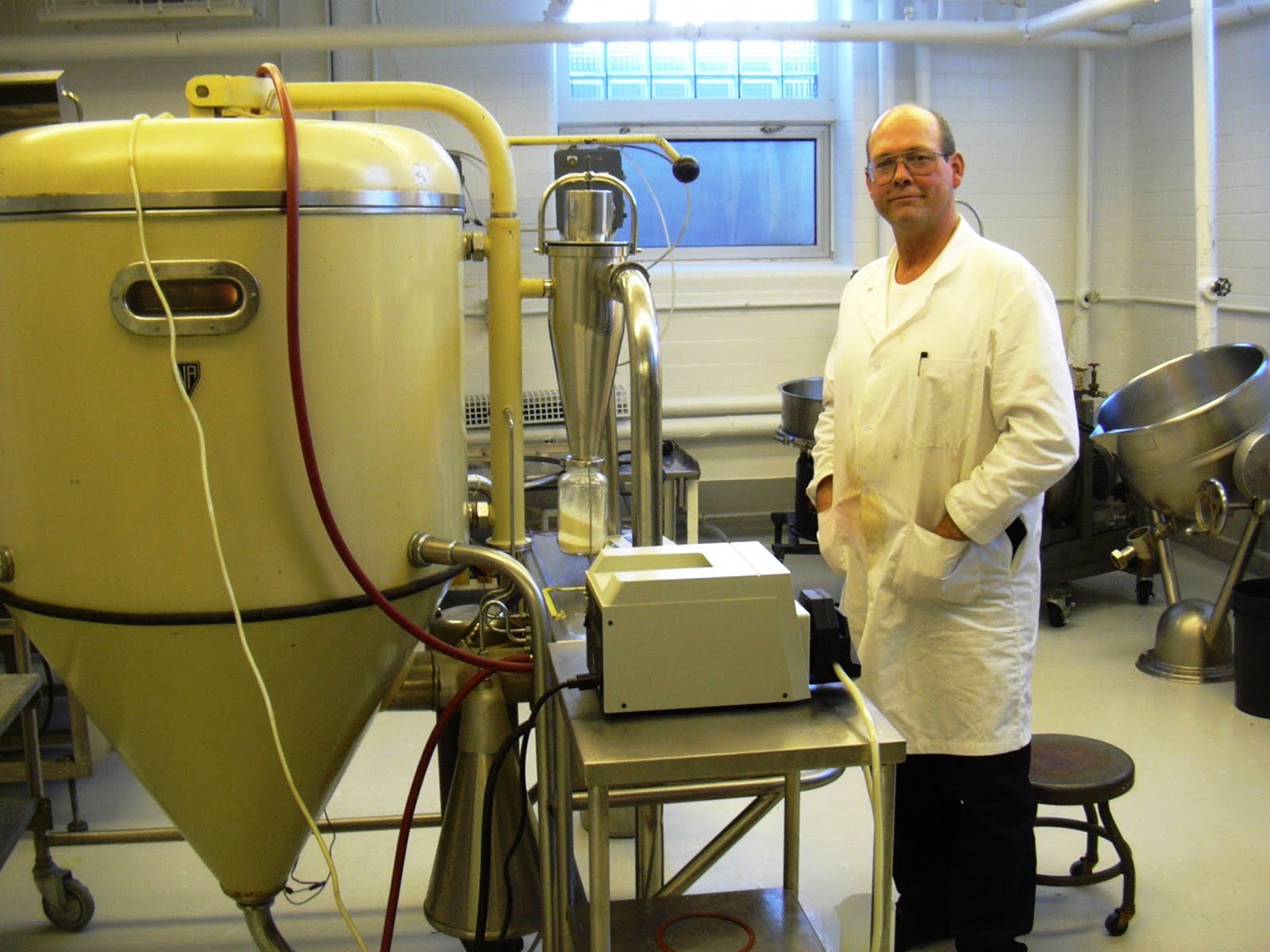
NSRL's own Soy Ambassador, Danny Erickson, retired this week after a distinguished 31 year career. Danny trained over 5,00 people during his time at the U of I. His soy processing expertise and equipment knowledge has provided private industry as well as government agencies and NGOs with vast information about dynamic processing and utilization techniques. Danny's hands-on approach to helping others learn positively impacted students, businesses, international organizations and U of I faculty and staff. Danny was the 2010 winner of the Chancellor's Academic Professional Excellence (CAPE) Award.

We wish Danny many good days on the golf course as he enjoys his summer!

As we look forward to the upcoming weekend and plan our 4th of July celebration, parade, BBQ and watching of fireworks displays, we want to say thanks to all of our deployed service members around the world and their families for their service and sacrifices. Because of their efforts, we remain free and safe. The United States of America really his the home of the free because of the brave!

Happy 4th of July!


Bridget